
Corrosion Management for Fire Sprinkler Systems

Within the DU Family of Companies, we provide specialized corrosion management solutions designed to protect the long-term performance and reliability of fire sprinkler systems. Corrosion is one of the most common hidden threats in fire protection piping and can significantly impact system integrity if left unaddressed.
Over time, corrosion can weaken steel piping, damage valves and fittings, restrict water flow, and ultimately compromise system performance during an emergency. A proactive corrosion management strategy helps reduce these risks, extend system lifespan, and support full compliance with fire protection standards.
Our approach focuses on identifying corrosion early, understanding system-specific risk factors, and applying targeted mitigation strategies to keep fire sprinkler systems operating as intended.
What Causes Corrosion in Fire Sprinkler Systems?
Corrosion in fire sprinkler systems occurs when metal components react with oxygen and moisture inside the piping network. In wet pipe systems, the primary driver of internal corrosion is trapped oxygen found in air pockets within the system.
When the system is filled with water, oxygen from these trapped air pockets dissolves into the water and reacts with the steel pipe walls. This reaction begins quickly and leads to the formation of rust, surface degradation, and pitting over time.
While water chemistry—including pH levels, chlorides, and dissolved minerals—can contribute to corrosion rates, research and field experience show that trapped air is often the most significant contributor in wet systems. For this reason, effective air management is a key component of long-term corrosion control.
Without mitigation, corrosion can lead to:
- Internal pitting and pipe wall loss
- Reduced hydraulic performance
- Leaks and system failure points
- Premature system replacement
Signs of Corrosion in Fire Protection Systems
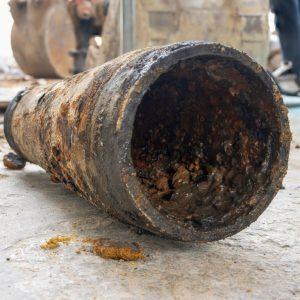 Early identification is essential to minimizing damage and repair costs. Common indicators of corrosion include:
- Rust formation on exposed piping or components
- Discoloration or staining on pipes and fittings
- Flaking, scaling, or internal debris buildup
- Localized pitting or thinning of pipe walls
- Unexpected leaks or pressure loss
Routine inspections help detect these issues before they escalate. Facilities should incorporate regular visual assessments and structured inspection checklists to ensure all system components are evaluated consistently.
Maintaining detailed service and inspection records also supports trend analysis, helping identify developing corrosion patterns and informing long-term maintenance planning.
Corrosion Management and Prevention Strategies
The DU Family of Companies uses a combination of inspection, testing, and engineering-based solutions to evaluate and manage corrosion risk in fire sprinkler systems.
Visual System Inspections
Certified technicians inspect piping, valves, and system components for visible signs of deterioration, including rust, scale, and coating failure.
Advanced Non-Destructive Testing (NDT)
Technologies such as ultrasonic testing and other diagnostic methods are used to assess internal pipe condition, wall thickness, and structural integrity without system damage.
Pipe Sample and System Analysis
Where needed, pipe samples are analyzed to determine the root cause of corrosion and identify the most effective mitigation strategy. This process helps guide long-term system improvements and targeted corrective actions.
These services allow for a more precise understanding of system health and support data-driven maintenance decisions.
DU Family of Companies Corrosion Control Solutions
Our corrosion management programs are designed to reduce risk, improve system reliability, and extend the service life of fire sprinkler infrastructure.
Available solutions may include:
- Water quality and system testing
- Hydro and hydro-pneumatic flushing
- Internal pipe condition assessments
- Nitrogen inerting solutions
- Automatic air release and venting systems
- Targeted pipe repair and replacement
By combining field expertise with advanced corrosion mitigation technologies, we help facilities reduce unexpected failures and maintain dependable fire protection performance.
Protect Your Fire Sprinkler System
Corrosion often develops silently, but its impact can be significant. A proactive corrosion management plan helps ensure your fire protection system is ready when it matters most.
Contact the company close to you to schedule an inspection or learn more about our corrosion management services for fire sprinkler systems.