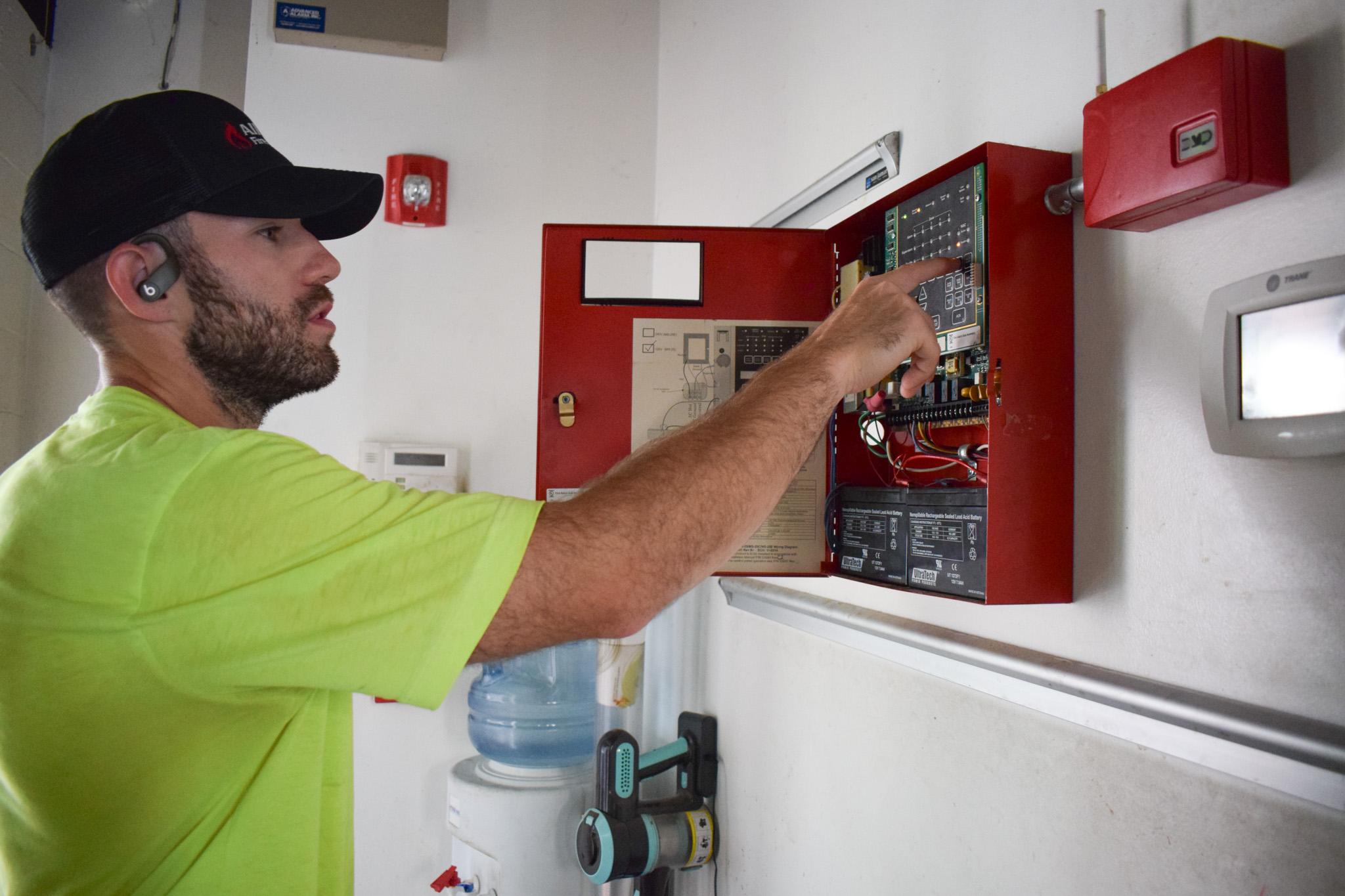
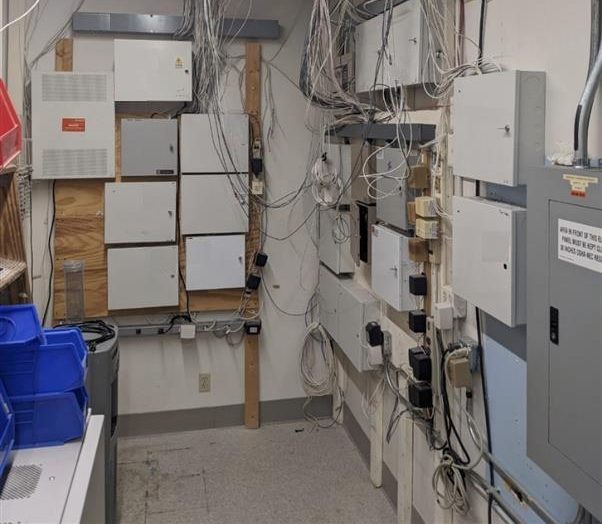
Just like any other component of your building’s fire protection scheme, your fire alarm system needs to be inspected on a regular basis to help prevent system failure. Early warning of a fire is critically important for the people inside your facility. Getting your systems regularly inspected and tested will help to ensure that your people get the early warning they need to safely escape from a fire.
NFPA 72
Inspections and testing of your fire alarm systems are required per NFPA 72. NFPA 72 is the National Fire Alarm and Signaling Code. It is enforced by most local jurisdictions, but you should check with your Authority Having Jurisdiction to see if your area has additional requirements. Inspections should be performed by a certified technician.
How Often Do Fire Alarms Need to be Tested and Inspected?
Fire alarms need to be inspected and/or tested:
Monthly
Semi-annually
Annually
The frequency of inspections and testing of the components of fire alarm systems is detailed in NFPA 72.
What Happens During a Fire Alarm Inspection?
During a fire alarm system inspection, all the components of the system are visually checked to help ensure that they are in operating condition. During testing of fire alarm systems, the system components are checked for functionality. The components that need to be inspected and tested include:
Fire alarm control panel
Smoke detectors and heat detectors
Manual pull stations
Horns and strobes
Batteries
Annunciators and zones
Output relays and activations
Flow switches, tamper switch, and low-pressure alarms
Supervised control valves and switches
Get Your Fire Alarms Inspected with Davis-Ulmer
At the DU Family of Companies, we provide inspections and testing of fire alarm systems in accordance with NFPA and local regulations. Our certified technicians can perform inspections monthly, semi-annually, annually, or as often as needed. We have experience with a variety of commercial, industrial and residential applications. We provide fire protection services for customers in the Eastern United States.
Working in the field while you train in the trade.
There’s a persistent assumption in the United States that a successful career requires a college degree. Sure, some professions—like teaching or medicine—do require four or more years at a college or university. But as demand for skilled tradespeople continues to increase, now more than ever higher pay doesn’t require higher education.
“There’s still a stereotype that working in trades is ‘less than,’” says Paul Akins, talent development for Davis-Ulmer Companies. “But The truth is that valuable education happens in classrooms and on jobs. Unless you’re 100% sure you need that degree, you may not.”
Despite lingering sentiments surrounding the choice to become an electrician, plumber, or technician, the data shows that more and more students are opting for trade school and jobs with apprenticeship programs over the collegiate experience. The number of students enrolled in vocational-focused community colleges increased 16% from 2022 to 2023 according to the National Student Clearinghouse Research Center.
Here are a few reasons why choosing a career in the trades is a smarter choice for many than enrolling in college.
1. Avoiding debt
As of March 2024, the average federal student loan debt in the U.S. is about $37,850 according to the U.S. Department of Education, with many borrowers racking up loan amounts into the six-figure range. As the cost of tuition at 4-year colleges continues to rise with no guarantee that a degree will land a job capable of repaying those loans, many see college as more of an expensive gamble than a path toward better pay.
Rather than paying for an education, employees who enroll in on-the-job apprenticeships and training programs get paid to learn while they’re working, bringing home a paycheck and gaining valuable skills at the same time. Without mounds of student debt, a trades worker in their early 20s can build solid credit and put more income toward investments in their future like retirement savings and buying a house instead of funneling every penny toward loan payments for a decade or more.
2. In-demand jobs
According to the Bureau of Labor Statistics, job openings in skilled trades are growing faster than average through 2029. In contrast, professionals in fields that were once considered sure-fire paths to success—healthcare, technology, finance—are struggling to find employment. As market conditions fluctuate and factors like emerging technology and global trade impact the economy and jobs, one thing will remain certain: there will always be a demand for the people who know how to install and fix electrical, plumbing and mechanical systems.
“The labor statistics are clear—the openings in the trades outnumber what we used to call ‘white collar’ jobs,” says Davis-Ulmer Companies’ Director of People Teams Danielle Phillips. “We’re even seeing it in our parent company, API, as well. Recent job postings are all for technicians; fewer in administration and management.”
3. Learning by doing
Instead of waiting two, four or more years to start a career with a college degree, apprentices are out in the field practicing their craft while learning on day one. For people who enjoy working with their hands, this kind of learning by doing unlocks their unique and valuable skills.
“The people who excel at trades are driven problem-solvers,” says Akins. “They’re great at trouble shooting and figuring out puzzles.”
While most apprenticeship programs do include classroom instruction and reading, it’s usually followed immediately by practical application.
“Trades do rely on book knowledge,” says Akins. “The advantage to an apprenticeship program is that the students are given the opportunity to apply their new knowledge immediately, which reinforces the classroom learning.”
4. Open to all ages
Apprenticing to work in the trades isn’t just for those fresh out of high school—it’s a viable option for people looking for a career change or a second career following retirement, too. Akins says the apprentices currently enrolled in programs offered by Davis-Ulmer Companies range in age from 18 to over 50 and include retired firefighters and former military personnel.
“We actively recruit veterans and retired firefighters,” says Akins. “They have a service and protection mindset, so they’re drawn to what we do, and they bring unique skills and perspectives to the learning environment.”
Learning alongside older apprentices whose teamwork, problem-solving and work ethic have been honed by years in the workforce is valuable to younger apprentices, too, who benefit from the examples and perspectives shared by more seasoned peers.
5. Opportunities for advancement
Akins began his career as an alarm install technician 30 years ago. Now he teaches new generations of trades people who are just starting a career path that can lead to roles in project management, design, sales and leadership ranks. He says that along with opportunities to grow and learn as a tradesman, a company that offers apprenticeships and on-the-job training is great place to work, too.
“It’s nice to work for a company that’s investing in the skills and success of its people,” says Akins. “I’ve always felt like I’m a member of a team that really cares about me.”
After starting his career at Home Depot, Norman Mishoe switched gears to attend trade school for training as an electrician. He joined S&S Sprinkler in 2018 as an entry-level technician and completed the company’s apprenticeship program. He transferred to Beach Lake, also part of the DU Family of Companies, in 2024 and is now an alarm and detection department manager who is confident he made the right career choice.
“Financially I’m able to take care of my family,” says Mishoe. “I can keep growing and learning; there are lots of opportunities here. Someone who can be successful in this field is someone who is willing to learn, take their own development into their own hands, do a little extra outside learning, and ask questions. Some of our newer recruits ask really good questions that challenge even the instructors, and we all thrive in that environment.”
Need more information? Contact our Career Development Team: [email protected]
Check out all the career opportunities within the DU Family of Companies HERE
Veterans – Interested in joining our team? Learn more about our dedicated veterans’ program.
A distribution center or warehouse can hold tens of thousands of products requiring security to be a top priority. Installing video surveillance and access control can help prevent loss, improve operations and create a safer working environment for employees, which translates to a better bottom line.
There are some who may think they are entitled to take merchandise. We know as a security company the presence of video cameras can decrease theft.
Advanced Video Surveillance Capabilities – Video surveillance technology today can:
Provide broad coverage of an area
Zoom in to clearly identify a person, object, or vehicle
Highlight an image and use advanced search technology to scan large amounts of footage
Allow administrators to follow a person, vehicle, or object and track their path throughout the facility
Strategic Camera Placement – Cameras should be installed:
Inside and outside the facility
With special attention to shipping and receiving areas
Positioned to view parked trailers with merchandise still inside
Access Control Beyond Entrances – While you may already have an access control system for entrances and overhead doors, consider:
Adding access control to cages and rooms with expensive merchandise
Ensuring that if something goes missing, an audit trail can be retrieved
Matching access logs with surveillance video for positive identification
Preventing misuse of credentials by checking against video footage
Credential Management vs. Traditional Keys – Access control administrators can quickly disable credentials when an employee leaves or is terminated.
If using traditional keys, access cannot be revoked as quickly, increasing security risk
A few tips to keep in mind when securing a warehouse or distribution center:
Receiving should be located away from the shipping area; it creates an easy access point for theft when they are located in close proximity.
Employee parking should be located away from the shipping or receiving areas, again it creates an easy access point for theft.
Create specific entrances and exits for employees that are not in the shipping or delivery areas.
Do not allow unauthorized people to wander around the building, such as truck drivers looking for a bathroom.
Do not leave unloaded merchandise unattended on the loading docks.
With multiple warehouses or distribution centers located at different places, security can be difficult to manage. With the use of a cloud based system access from anywhere can be done with ease.
Choosing the right security provider is a critical way to help eliminate risk, when there is a large volume of inbound and outbound traffic. Whether you have one or multiple warehouse locations we can create a security, access control, and video surveillance system just right for you. Contact a DU Family of Companies location near you.
If a fire ever breaks out inside your business or in a building you own or operate, you are going to want to have a fire suppression system in place to eliminate the risk of damage and put the fire out as quickly as possible. A fire suppression system can literally be a lifesaver in the event of a fire, and it can give you the peace of mind that comes along with having one installed even if you are never forced to deal with a fire. There are several different types of fire suppression systems on the market today. Take a look at the three most common types of fire suppression systems below.
Water
A fire suppression system that relies on water is the most common type of fire suppression system, and most people choose to have them installed in businesses and buildings. You can choose from either an automatic sprinkler system that will turn on as soon as it senses smoke, heat, or fire—or a manual sprinkler system that needs to be turned on in order to start working. Both can be effective during a fire.
While most people choose to go with a fire suppression system that uses water to put out fires, there are also several chemical agents that can be used to get the job done. Potassium carbonate is one chemical agent that can be used to put out a fire. It’s a wet chemical that is often found inside of fire extinguishers. There are also some dry chemicals that can be used in fire suppression systems.
Inert Gasses
Once a fire starts, it needs a steady supply of oxygen to spread. Inert gasses like argon and purified nitrogen can be used to choke out a fire by cutting it off from oxygen in the air. There are some companies that will install fire suppression systems that use inert gasses since water can often cause damage to electrical equipment, furniture, and more. Inert gas fire suppression systems are defined as using one or more of the gasses nitrogen, argon or helium.
Regardless of which type of fire suppression system you ultimately choose to go with in your business or building, technicians from the DU Family of Companies can help you install it. We have experienced fire suppression system installers who can set you up with the best system for your specific property right away.
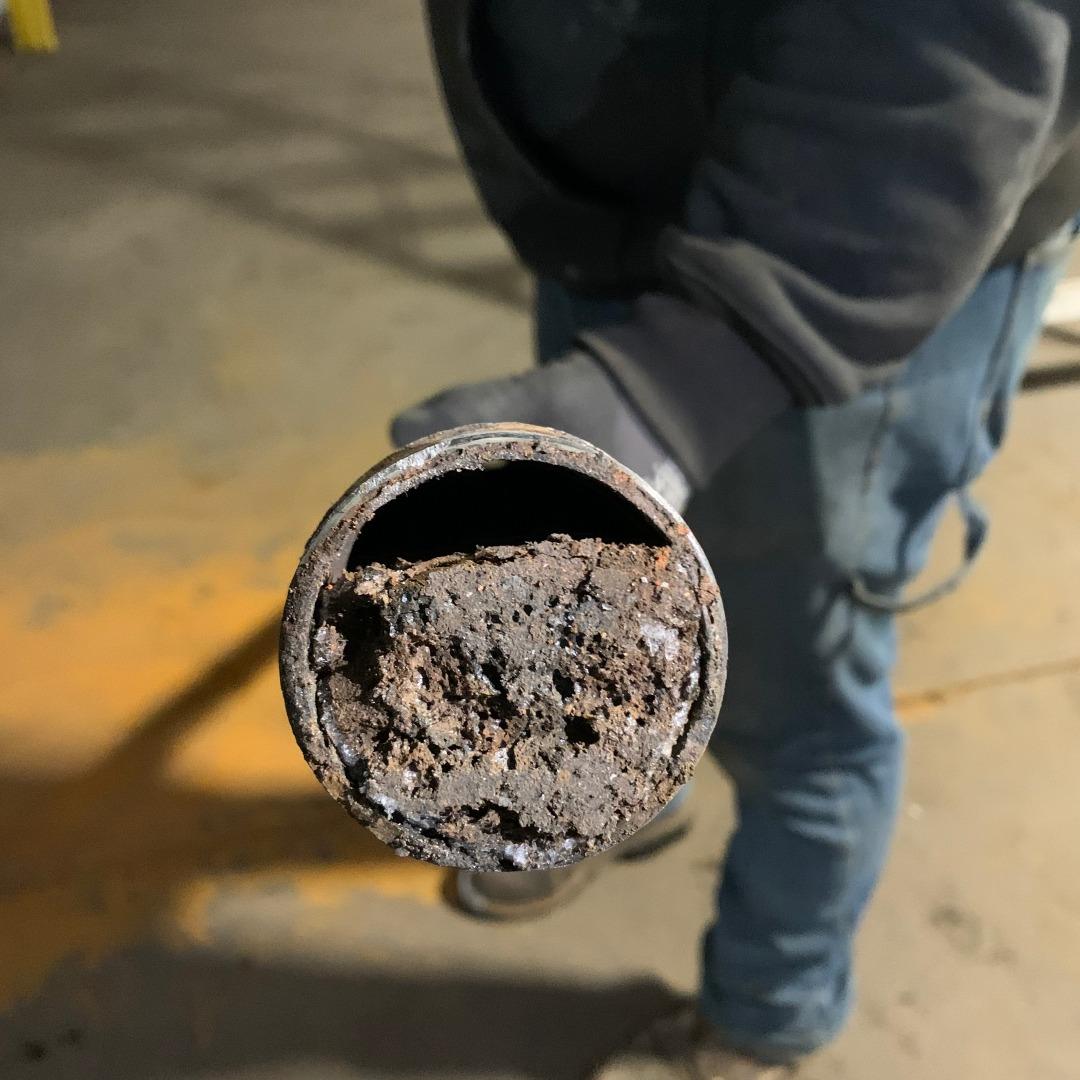
Corrosion can occur within a fire sprinkler system one of two ways. Either the combination of water and oxygen present or microbes found in untreated water that can attack the metal pipes. This can happen anywhere in the system and can be difficult to spot as there are many parts that aren’t seen in a visual inspection. When corrosion occurs the functionality of the sprinklers can be impaired, impacting the safety of your building and occupants.
Corrosion Maintenance
Keeping your fire sprinkler system well maintained is imperative to preventing corrosion! The DU Family of Companies offers both corrosion testing and maintenance. If you suspect corrosion or if you want to ensure your system is clear, request a quote online today! Corrosion can become a costly issue if not resolved in the early stages and can inhibit the effectiveness of your system if activated.
Wet Pipe System Corrosion Prevention
In order to prevent corrosion in wet pipe sprinkler systems, nitrogen gas is blown into the piping to dilute the oxygen levels before they are filled again with water. This will reduce the amount of oxygen present, decreasing the risk of corrosion.
The water in your pipes, or the pipes themselves can also be treated to reduce the amount of microbes present that can cause damage to the metal. This will reduce the risk of contaminated, stagnant water causing corrosion issues.
Dry Pipe System Corrosion Prevention
Similar to wet pipe systems, dry pipes are also at increased risk of corrosion when oxygen and water is present. Nitrogen can be blown into the pipes to displace oxygen, completely removing it, which will both reduce the risk of corrosion and protect pre-action systems from water accumulation when not active.
Schedule Corrosion Maintenance
Our team of technicians will inspect your system on a regular or as needed basis and perform any required maintenance to ensure your sprinklers are both functional and safe. Contact us today to schedule a maintenance appointment.